Most athletic departments we meet already know something needs to change. Far fewer can say precisely what. There is a feeling that the program could be better, that the staff could be more unified, that the department could matter more to the school. But feeling is not a plan, and you cannot build strategy on a hunch.
That gap is why we almost always recommend starting with an audit.
You cannot read the label from inside the jar
Leaders inside a department are the least able to see it clearly, and that is not a criticism, it is proximity. You built the systems, you hired the staff, you inherited the traditions. The things an outsider notices in an afternoon are the things you stopped noticing years ago because they have always been that way.
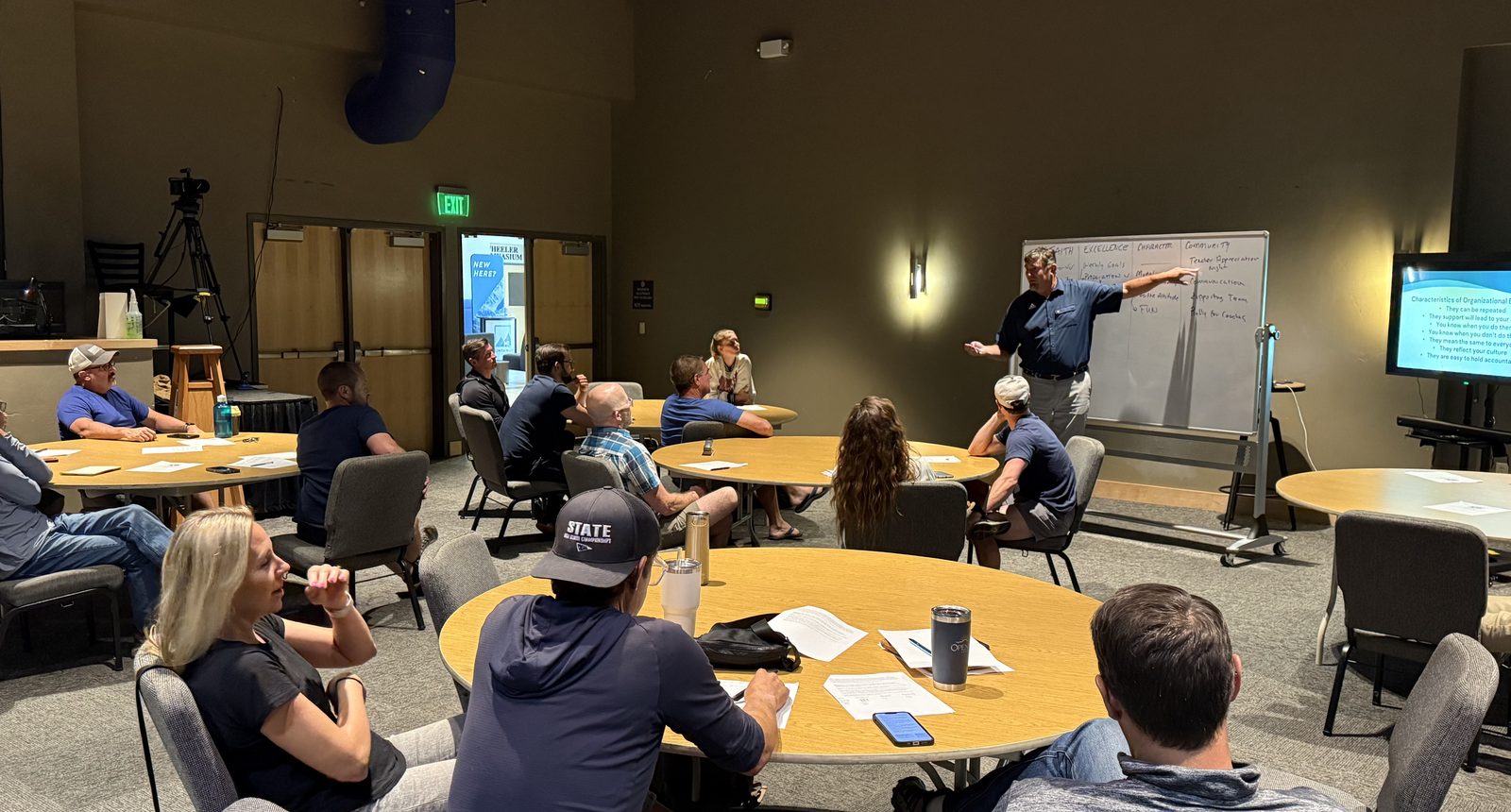
An audit is not an accusation: it's a mirror. Our assessment goes to athletic leadership, staff, and coaches, and it asks about the areas that quietly determine whether a program thrives: staffing, staff culture, roles and development, clarity of mission and vision, funding, structural efficiency, communication, leadership effectiveness, facilities, and the external factors pressing on all of it.
Strengths first, then the hard part
A good audit celebrates before it corrects. Nearly every department we work with is doing something genuinely well that nobody has named out loud. Naming it matters, because that strength is usually the foundation you build the rest of the plan on.
Then comes the harder half: the weaknesses, the blind spots, the things that will become threats if left alone. Blind spots are the reason the outside perspective is worth paying for. By definition, you are not going to find them yourself.
An audit that ends in a document is only half done
The point of an audit is not the findings. It is what you do with them. Ours ends in an outcome document that pairs every finding with a recommendation, so the department is not left holding a diagnosis with no treatment. And because implementation is where most plans die, we stay in a consulting role afterward to help turn recommendations into an actual sequence of work.
If your department is heading into a strategic planning cycle, a leadership transition, or simply a season where "we should probably look at this" has come up one too many times, that is the moment an audit earns its keep.